
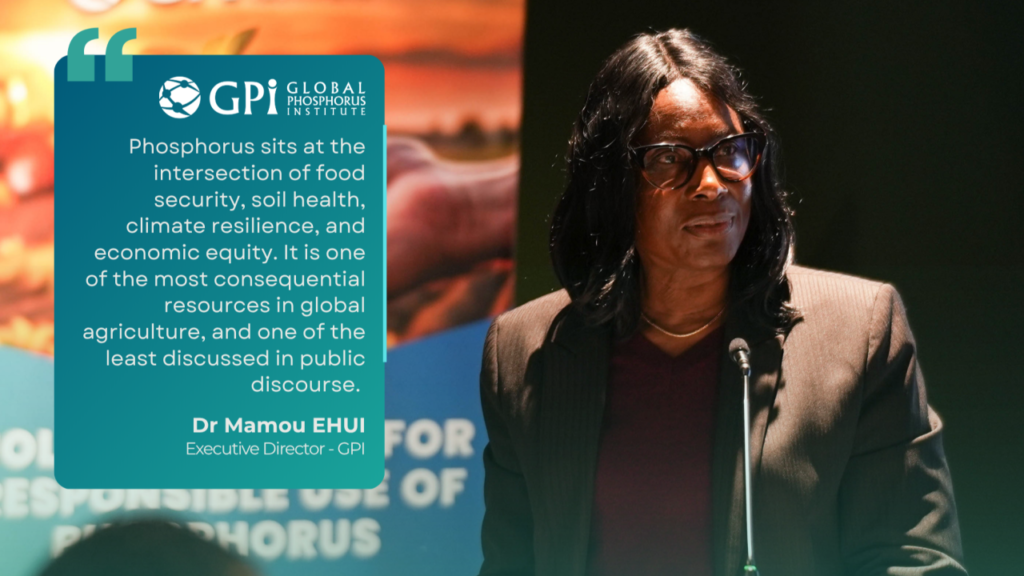
By Dr. Mamou Ehui, Executive Director, Global Phosphorus Institute
Phosphorus sits at the intersection of food security, soil health, climate resilience, and environmental sustainability. It is one of the most consequential resources in global agriculture, and one of the least discussed in public discourse. At our Stakeholders’ Forum in Ben Guerir last week, that began to change.
We brought together scientists, policymakers, development partners, private sector leaders, and civil society organisations from across Africa, Europe, Asia, and the Americas to launch GPI’s Strategic Direction 2030 and engage constructively on what it will take to deliver. Here is what stood out.
1. Coherence matters more than volume
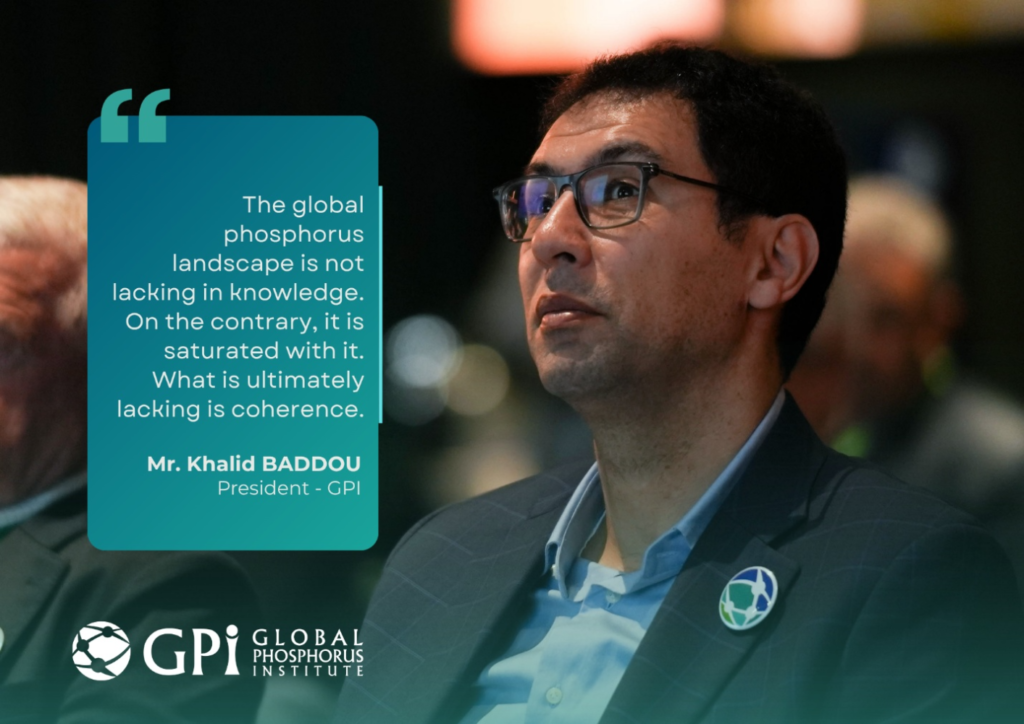
The phosphorus field has no shortage of research, data, or good intentions. What it has lacked is a shared reference point. As our Board President, Mr. Khalid Baddou, put it: “The global phosphorus landscape is not lacking in knowledge. On the contrary, it is saturated with it. What is ultimately lacking is coherence.”
That observation has direct implications for how GPI works. Our role is to synthesize, translate, and connect – to ensure that evidence moves from laboratory to policy table, and from technical reports to field application. Mr. Ludwig Hermann of the ESPP European Sustainable Phosphorus Platform reinforced this point: clearly communicated consensus is what enables decision-making.
2. Applicability is the step that changes everything
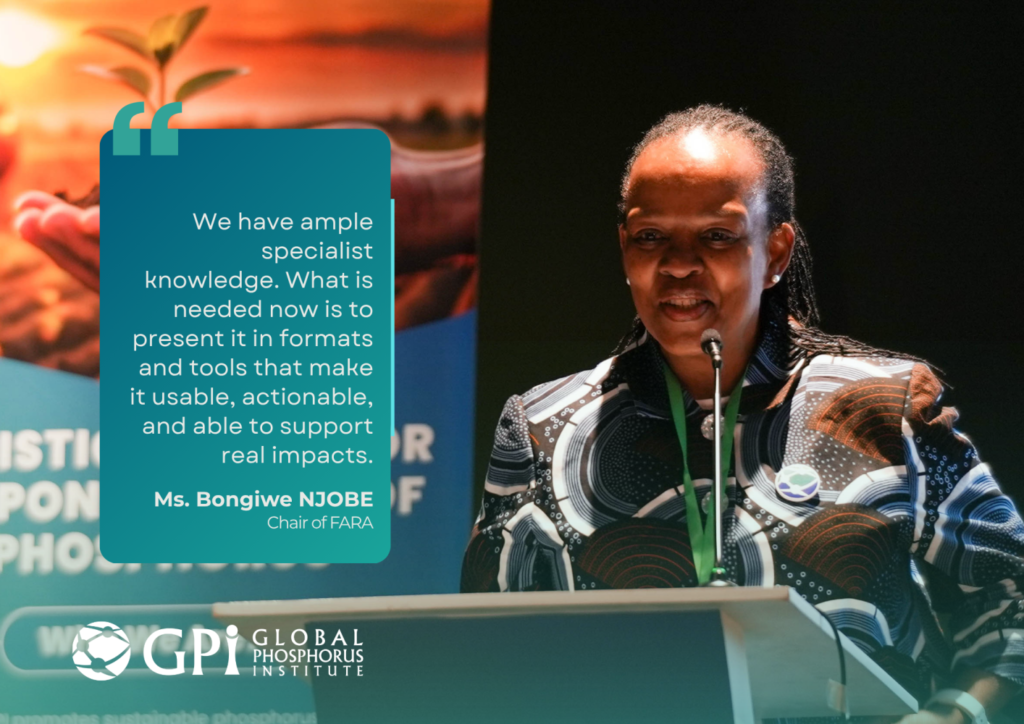
Scientific knowledge only creates impact when it can be used. During our panel on the Africa Phosphorus Platform for Food Security, Ms. Bongiwe Njobe, Chair of FARA, emphasized the need to translate existing expertise into practical support: “We have ample specialist knowledge. What is needed now is to present it in formats and tools that make it usable, actionable, and able to support real impacts.”
The science exists. The real question is whether it reaches decision-makers in a form that supports action. This interpretive work is where GPI’s focus on knowledge translation lies.
3. Africa’s phosphorus challenge requires Africa-specific thinking
Over 80% of Africa’s soils are low or deficient in plant-available phosphorus. While phosphorus excess is a concern in parts of Europe and Asia, phosphorus depletion is the dominant reality across much of Africa.
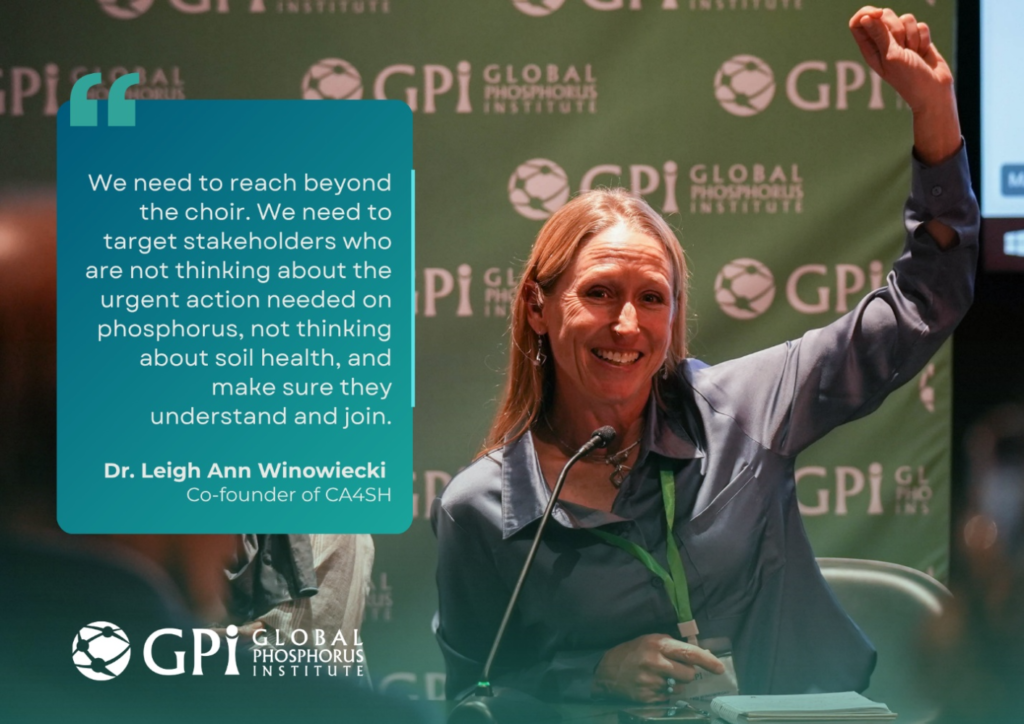
As a result, solutions and investment priorities must be context-specific. Dr. Leigh Winowiecki of CIFOR-ICRAF and co-founder of CA4SH noted that the phosphorus agenda must be integrated into the global conversation, but built from African realities first.
4. Private sector engagement is a design choice, not an afterthought
Dr. Innocent Okuku, CEO of AFIDA, provided a direct observation: “When the private sector is treated as an afterthought, adoption of research outcomes is slow.”
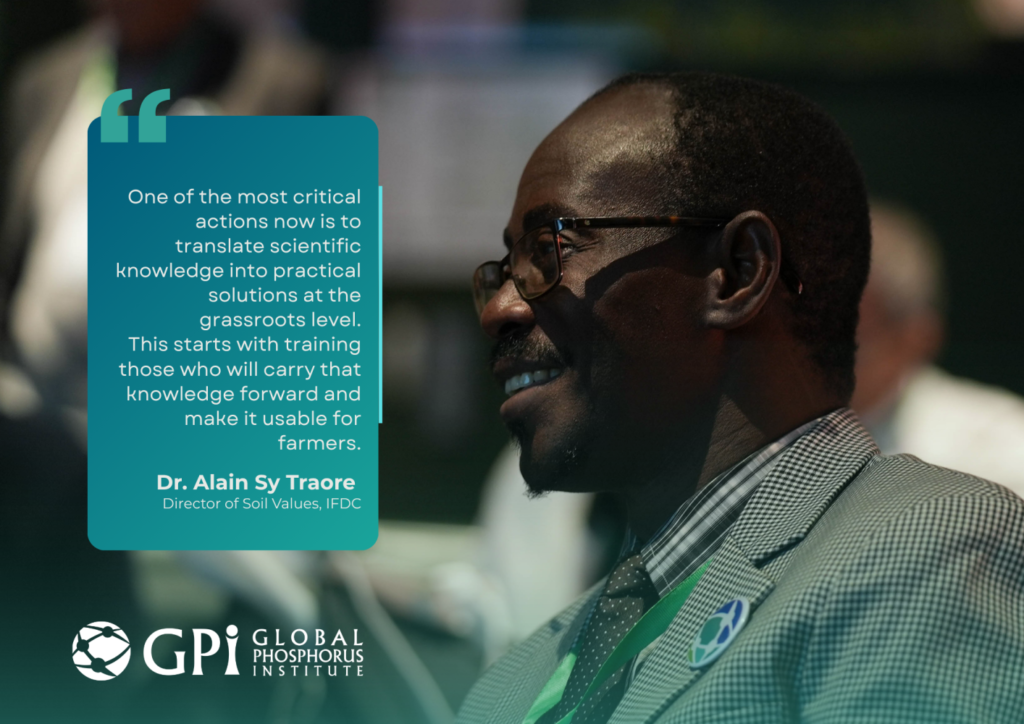
The African Phosphorus Platform for Food Security (APPFS) was designed with industry engagement from the outset. This is essential because the impact of research depends on whether it reaches farmers and agribusinesses. Dr. Sy Alain Traore of IFDC emphasized that short-term projects do not create impact; long-term partnerships built on shared commitment do.
5. The bar is high, and it should be
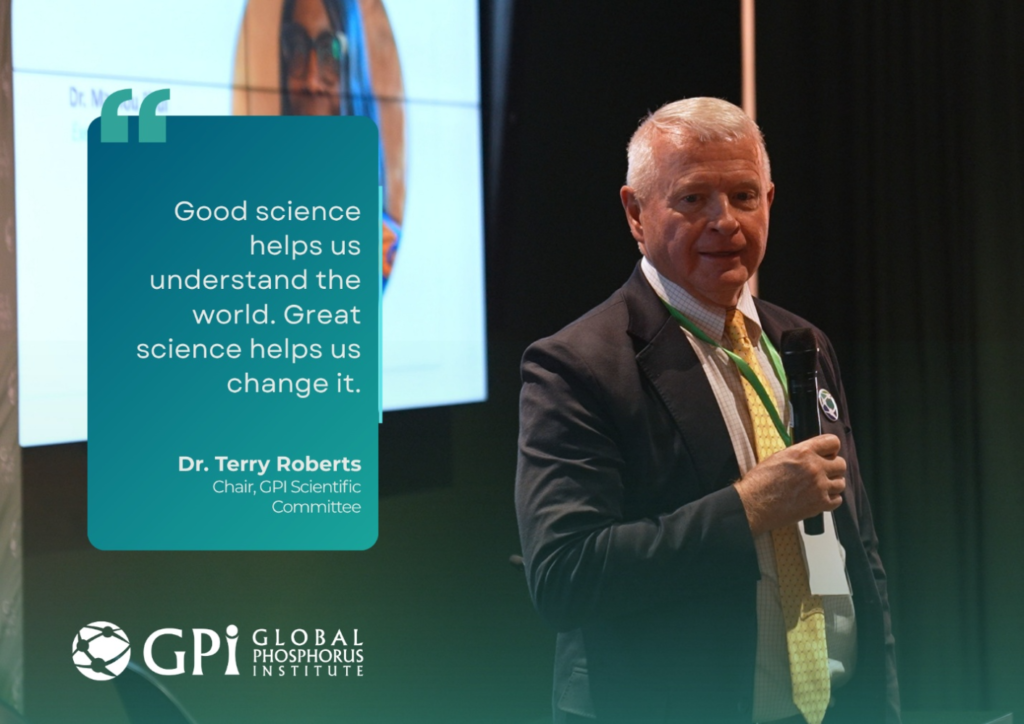
Dr. Terry Roberts, Chair of our Scientific Committee, closed with a powerful reminder: “Good science helps us understand the world. Great science helps us change it.” That is the level of ambition GPI holds for its work.
The forum confirmed that the phosphorus agenda is ready for a broader audience. The science is strong, the partnerships are emerging, and the case for its importance to food systems is compelling.
The work continues.
#Phosphorus #FoodSecurity #GPI #Africa #SoilHealth #SustainableAgriculture